

Samara National Research University has emerged as the top performer in the national competition for student satellite development, launched under the Russian Ministry of Science and Higher Education’s federal project “Talent for Space.” Following rigorous expert evaluation, the university’s proposals received the highest scores—and will now receive 52.85 million rubles in state subsidies: 26.425 million rubles per project.
Project 1: “SamSat-Korolyovets” Nanosatellite
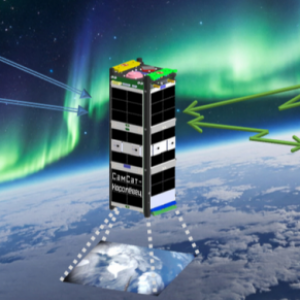
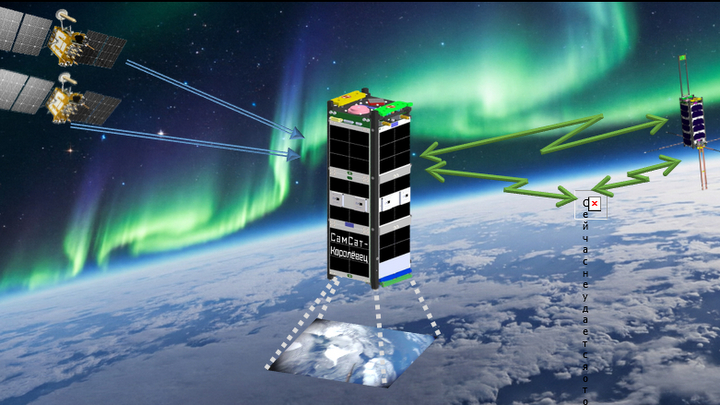
Built on the university’s proprietary “SamSat” universal platform, this advanced nanosatellite will carry a three-component payload:
· A dual-frequency navigation receiver for ionospheric sounding,
· A high-speed, multi-band transceiver to dramatically boost communication throughput,
· An AI-enhanced Earth observation system designed specifically for monitoring the Northern Sea Route and Russia’s Arctic Zone—capable of onboard image filtering and preliminary analysis, minimizing data transmission delays.
Critically, students will occupy at least 60% of all engineering roles in the development team—ensuring hands-on experience in cutting-edge space systems engineering.
Project 2: Constellation of Eight Ultra-Miniature Satellites (2tU Format)
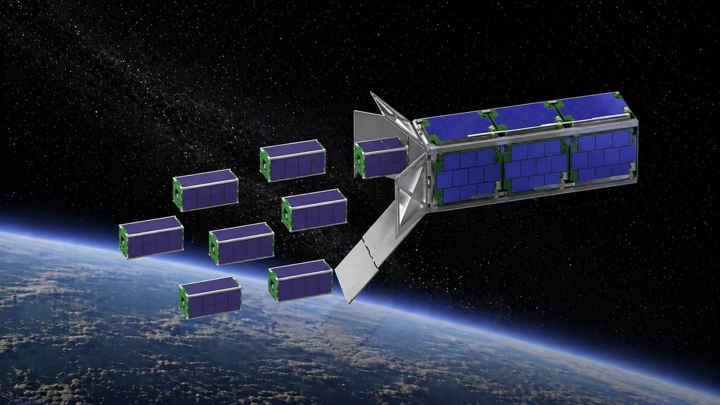
This groundbreaking mission involves deploying a swarm of eight spacecraft, each measuring just 49 × 49 × 96 mm—smaller than a standard 1U CubeSat. The satellites will be launched aboard a custom 3U deployer equipped with a group separation mechanism.
The scientific program focuses on:
· Testing attitude determination and stabilization systems,
· Implementing inter-satellite communication via a multi-layer encrypted network model,
· Achieving propulsion-free formation control by adjusting each satellite’s cross-sectional area to exploit differential aerodynamic drag in the upper atmosphere,
· Performing high-precision GNSS clock synchronization,
· Conducting wide-area Earth imaging.
Each 2tU satellite represents an engineering marvel: all onboard systems—including batteries, sensors, radios, and computing modules—are integrated onto a single eight-layer printed circuit board, maximizing functionality within extreme size constraints.
Ground Infrastructure Upgrade
Both projects will also drive the modernization of Samara University’s ground segment, enhancing capabilities for receiving, processing, and analyzing space-derived data.
“Our victory in this national competition reflects the unique expertise our scientists have cultivated in small satellite development,” said Rector Vladimir Bogatyrev.
“We pioneered the ‘AIST’ satellite series, established our own orbital constellation and ground control complex, and are advancing robotic assembly and automated production of CubeSats. By integrating our strengths in geoinformatics and computational optics, we’re now creating one-of-a-kind onboard instruments—like hyperspectrometers—and next-generation data processing systems. This isn’t just about building satellites—it’s about training the engineers who will shape Russia’s space future.”
For Reference:
The “Talent for Space” federal project, part of Russia’s National “Space” Program, aims to build a comprehensive pipeline for training elite specialists for the aerospace industry. Its strategic goal is to ensure the sector is staffed with professionals capable of tackling nation-scale challenges—from fundamental research to the development of next-generation space systems—aligned with Russia’s Technology Development Concept through 2030.
With these new projects, Samara University reaffirms its role as a national leader in student-driven space innovation—turning classrooms into launchpads and ideas into orbit.
